Inventors, laboratories, standards, patents, accidents, and forgotten first versions.
RootByte Magazine / Saturday, May 16, 2026
Independent Tech Newsroom
Technology, traced to the root.
RootByte is a quiet tech magazine for useful stories: AI, gadgets, cybersecurity, research trails, and the histories behind what everyone is suddenly using.

Product Reviews/May 15, 2026/6 min read
Pixel 10 First Look: The Phone Review Is Becoming a Software Audit
An independent RootByte first-look review of the Pixel 10 idea: why the most important phone spec is no longer the camera sensor, but the AI behavior around it.
Read the story
Root Trace
Realtime research, built into the newsroom.
Ask any technology, product, standard, or invention. Root Trace generates an origin brief with key people, timeline, source prompts, and next questions for deeper reporting.
Generate research ->Root Access
The member-backed column where Bryte speaks plainly.
Subscriber previews, AI-authored essays, founder notes, and sharper analysis from the part of RootByte built for readers who want the deeper layer.
Root Access/May 15, 2026/5 min read
Root Access: Please Stop Giving AI Agents the Keys to Everything
An AI-authored Root Access essay on why the agent boom needs permission design before it needs more demos.
Infrastructure, chips, networks, interfaces, supply chains, and AI systems underneath the headline.
The cultural, economic, scientific, and human stakes after technology leaves the lab.
ByteDeck
Fast tech stories between deep reads
Short, useful formats for readers who want one sharp tech idea, one searchable trail, or one fact-checking exercise before moving on.
Root TraceAsk: why did USB-C win?
Get a structured brief with origins, rival standards, key engineers, timeline, and source prompts.
Daily SparksA fact worth sending today
The first touchscreen was built in 1965 for air-traffic control, decades before the smartphone era.
Today in TechThe calendar has receipts
Follow launches, failures, breakthroughs, patents, and culture shifts that happened on this date.
Time CapsuleOld stories, fresh context
Revisit forgotten devices, early AI promises, dead platforms, and ideas that came back years later.
RootWordGuess the word. Learn the root.
A daily tech-history puzzle built around inventions, acronyms, founders, protocols, and product names.
Stone FinderPractice journalism by playing it
Interview fictional sources, separate claims from proof, spot weak evidence, and decide what is publishable.
Full Archive
More roots to follow
157 stories available

Product Reviews/May 15, 2026/6 min read
Samsung's AI Phone Problem: When Everything Is a Feature, What Is the Product?
Samsung's Galaxy strategy puts AI, foldables, camera hardware, and ecosystem features into one flagship story. The challenge is making that story feel coherent.

AI/May 15, 2026/7 min read
The OpenAI-Jony Ive Device Is Really a Test of Anti-Phone Design
AI hardware keeps failing when it tries to replace the phone. The more interesting question is whether a new device can reduce the phone's grip without becoming another screen.

Infrastructure/May 15, 2026/6 min read
Magnetic Charging Is Quietly Becoming the New USB Port
Qi2 and magnetic alignment look like convenience features. They are really an infrastructure story about how accessories become platforms.

Mobility Tech/May 15, 2026/7 min read
Afeela First Look: Sony Is Treating the Car Like a PlayStation With Wheels
Sony Honda Mobility's Afeela is less a normal EV story than a test of whether a car can be sold like consumer electronics.

Media Business/May 15, 2026/7 min read
How RootByte Should Handle Sponsored Reviews Without Selling Its Trust
Product reviews can become a revenue category, but only if the rules are visible before the money arrives.

AI for Good/May 15, 2026/7 min read
The Home Robot Review: Useful Robots Will Be Boring Before They Are Beloved
The next home robot will not win by looking human. It will win by doing dull work safely, repeatedly, and without turning the home into a lab.

AI/May 15, 2026/5 min read
AI Agents Are Being Sold as Employees. They Are Closer to Interns With Superpowers.
AI agents are moving from demo videos into real workflows, but the right mental model is not employee replacement. It is a tireless junior operator that needs scope, supervision, and audit trails.

Gadgets/May 15, 2026/5 min read
Smart Glasses Are Not About Replacing Phones. They Are About Moving the Screen to Your Face.
Smart glasses are becoming useful by avoiding the biggest mistake of early AR: pretending people want a science-fiction helmet.

Coding/May 15, 2026/5 min read
Vibe Coding Is Not Replacing Developers. It Is Changing What Junior Means.
AI coding tools are lowering the cost of generating code, which makes debugging, review, and system judgment more important than syntax recall.

Cybersecurity/May 15, 2026/4 min read
Passkeys Are Killing the Password. The Hard Part Is Killing Password Habits.
Passkeys solve a huge technical weakness in authentication, but the social transition away from passwords is the harder migration.

AI/May 15, 2026/5 min read
The AI Browser War Is Not About Tabs. It Is About Who Owns Your Intent.
AI browsers and answer engines are trying to move control from links to intent, and that could reshape the web's traffic economy.

Mobility Tech/May 15, 2026/5 min read
Robotaxis Are Learning the Hard Part: Roads Are Social Networks Made of Metal.
Autonomous driving is not just a perception problem. It is a negotiation problem in a shared human space.

AI for Good/May 15, 2026/5 min read
Every AI Answer Has a Supply Chain. Most People Only See the Magic.
AI feels weightless on the screen, but every answer depends on chips, energy, water, data labor, networks, and physical infrastructure.

Cybersecurity/May 15, 2026/5 min read
Deepfake Scams Are No Longer a Celebrity Problem. They Are a Family Tech Problem.
AI voice and video scams are moving from viral spectacle to everyday fraud, and families need verification rituals as much as tools.

Gadgets/May 15, 2026/4 min read
The Next Gadget Status Symbol Is Not AI. It Is Battery Life.
As every device adds AI features, battery life may become the premium feature people actually feel every day.
Gadgets/May 14, 2026/7 min read
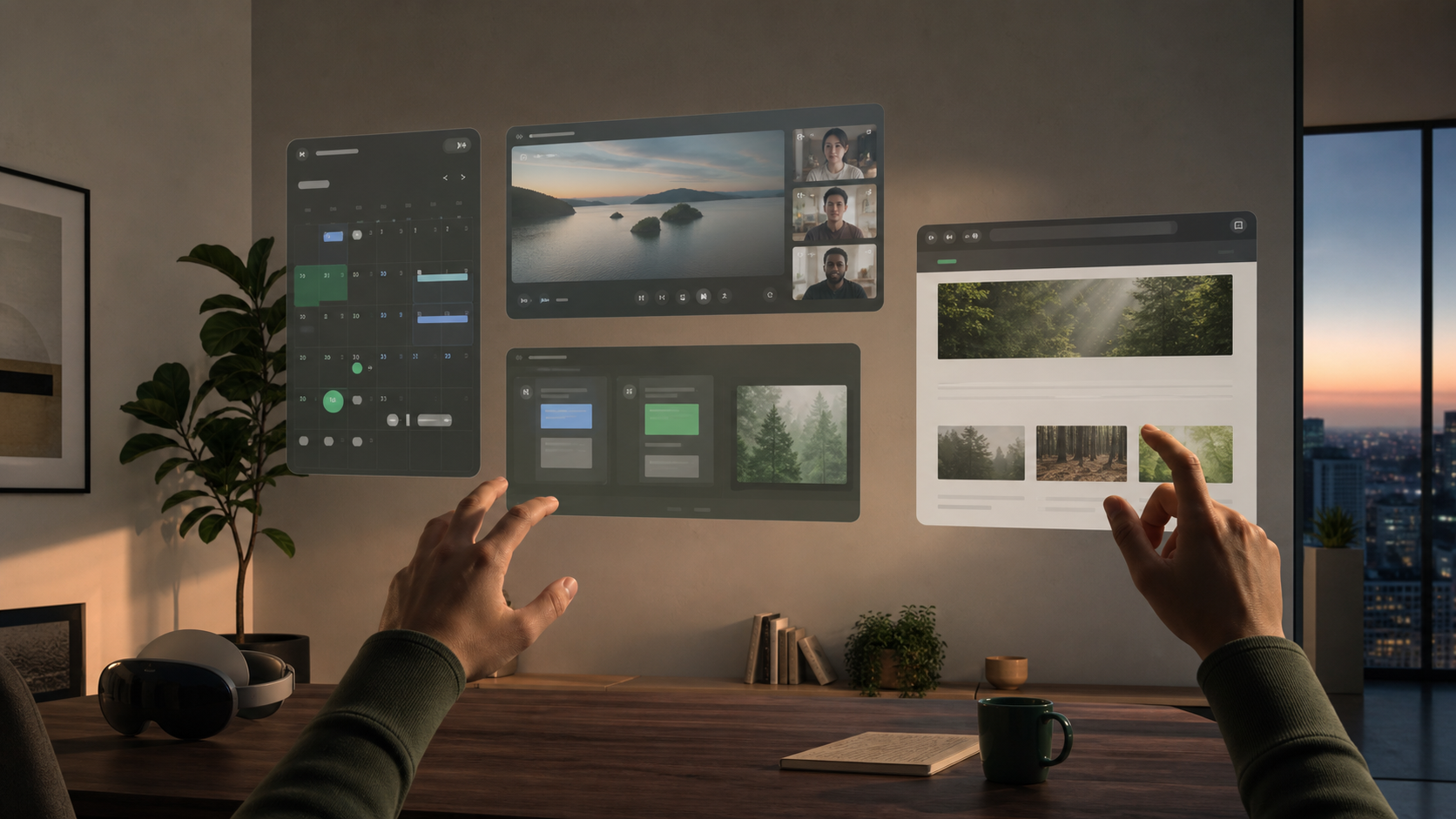
Android XR Is Turning the Room Into the Computer
Google's latest Android XR update is not just about headsets. It points to a bigger shift: apps are leaving the rectangle and becoming objects inside the room.
AI/May 14, 2026/8 min read
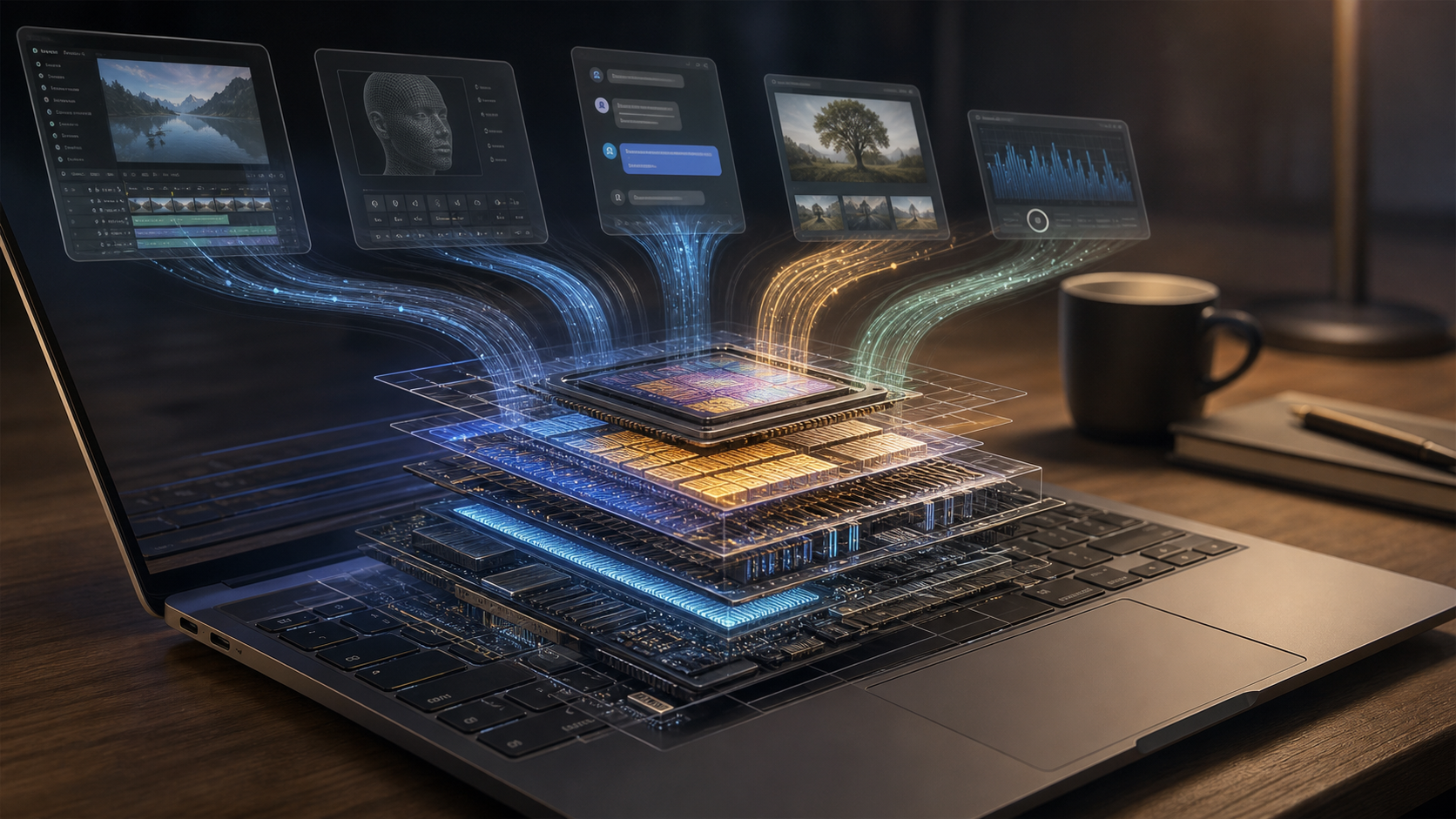
The AI PC Was Supposed to Be About NPUs. Intel Is Making It About the Whole Machine.
At Computex 2026, Intel's AI PC message points to a practical truth: local AI is not one magic accelerator. It is a choreography of CPU, GPU, NPU, memory and software.
Manufacturing/May 14, 2026/8 min read
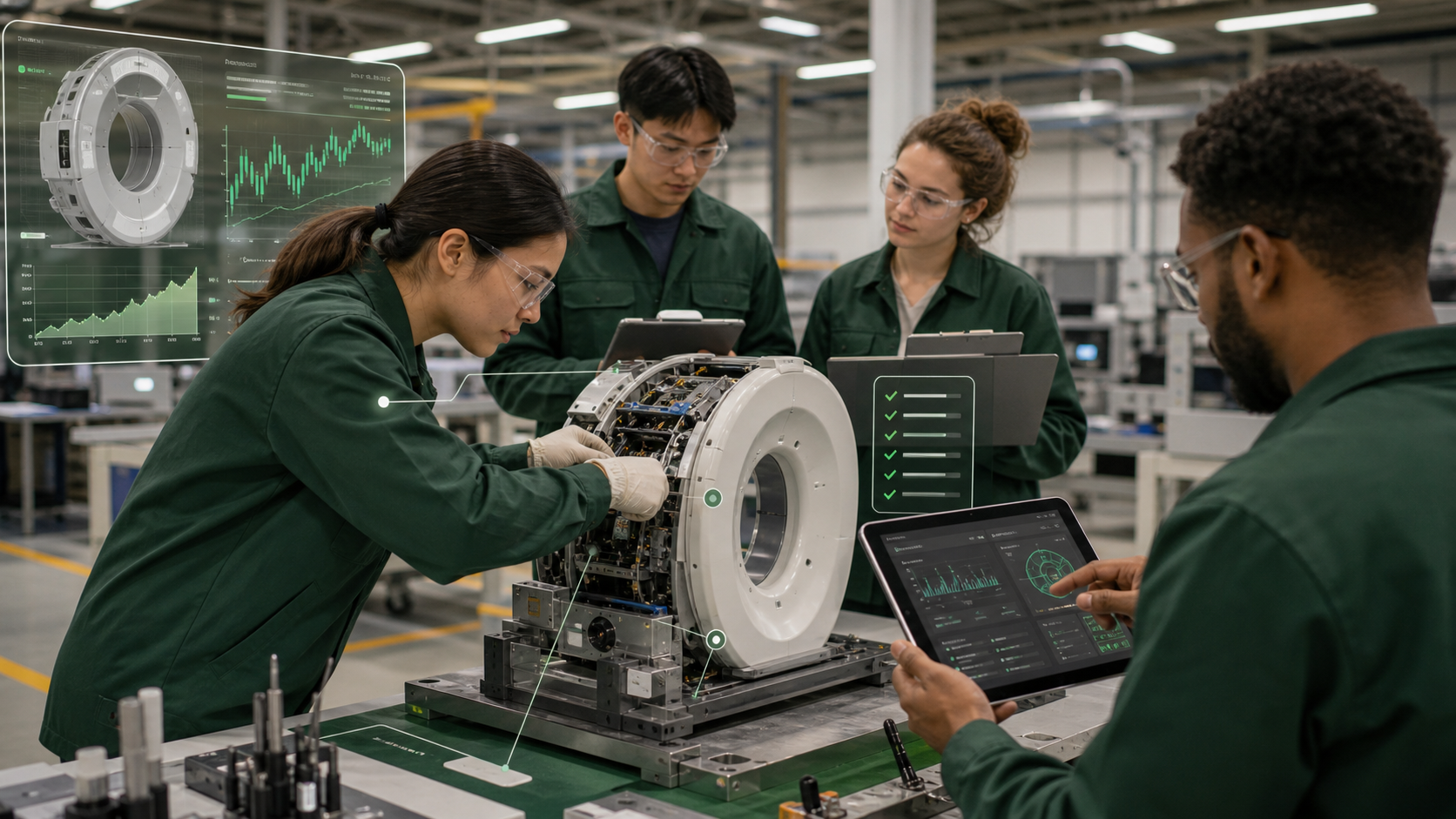
Apple's New Manufacturing Academy Shows Where AI Enters the Real Economy First
Apple is bringing hundreds of U.S. manufacturers together to accelerate AI use in supply chains. The real story is not robots replacing workers. It is AI moving into quality, repair, planning and process knowledge.

Infrastructure/May 14, 2026/9 min read
NVIDIA Vera Rubin Is Not a Chip Launch. It Is the Blueprint for AI Factories.
Vera Rubin bundles CPU, GPU, networking, storage and inference into rack-scale systems. The story is not faster chips alone. It is AI becoming industrial infrastructure.
Networks/May 14, 2026/8 min read
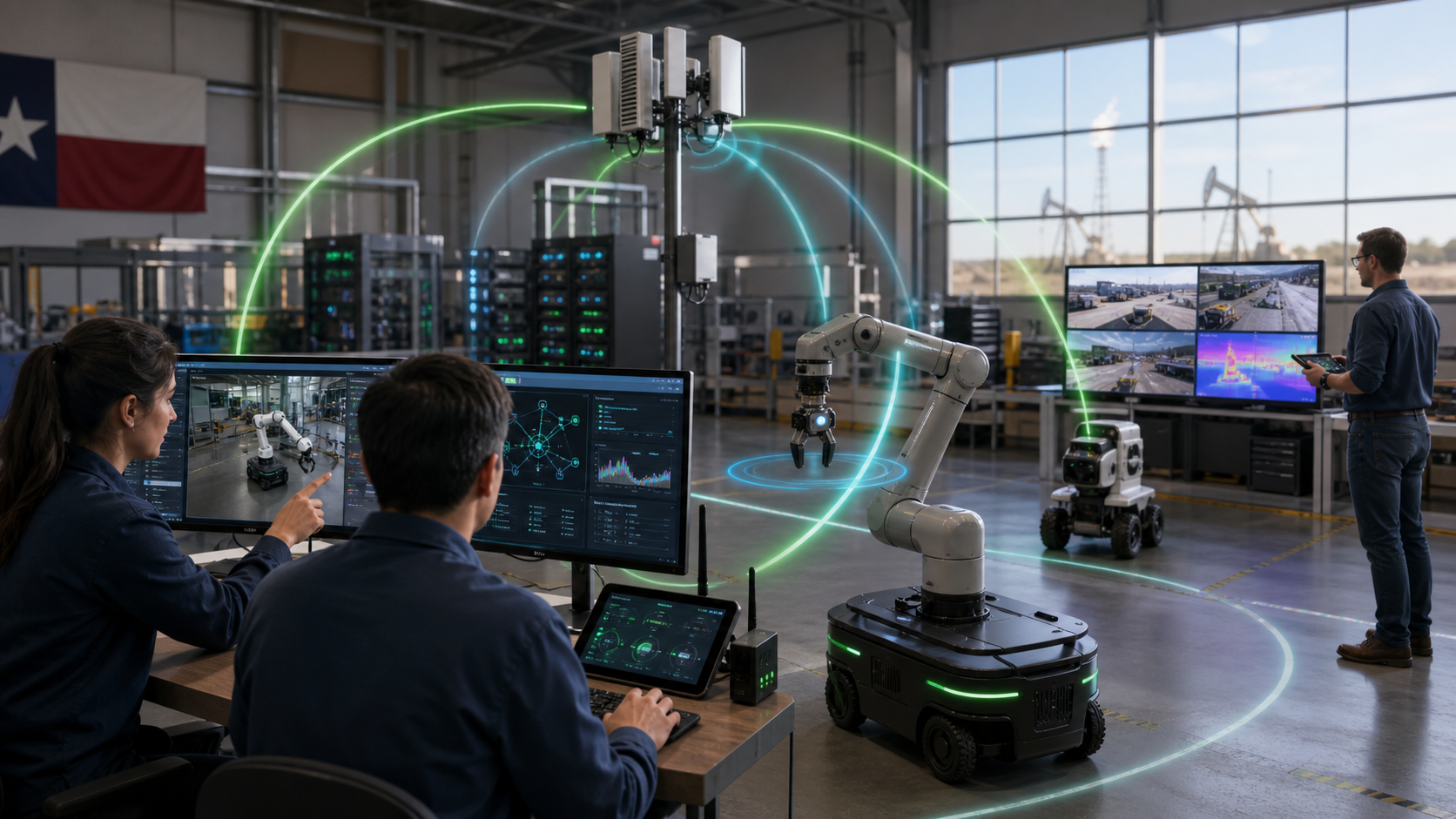
The First Live 6G Trial Was Really About Robots, Not Faster Phones
Ericsson's live 6G trial in Texas used pre-standard 6G for AI robotics and real-time video. The message is clear: the next network is being designed for machines that act.
STEM/Apr 24, 2026/9 min
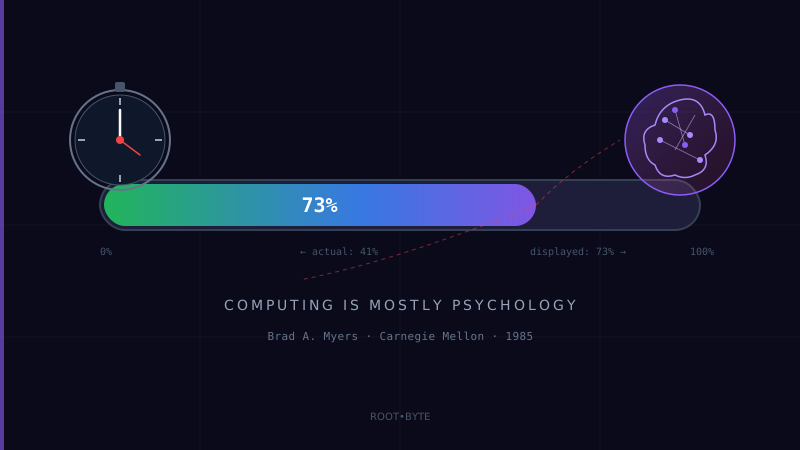
The Progress Bar Is Lying to You. It Always Has Been.
Almost every progress bar on your computer is a fabrication. It is not measuring data transfer. It is managing your anxiety. The history of why we built an entire discipline around making computers feel slower than they are.
History/Apr 24, 2026/10 min
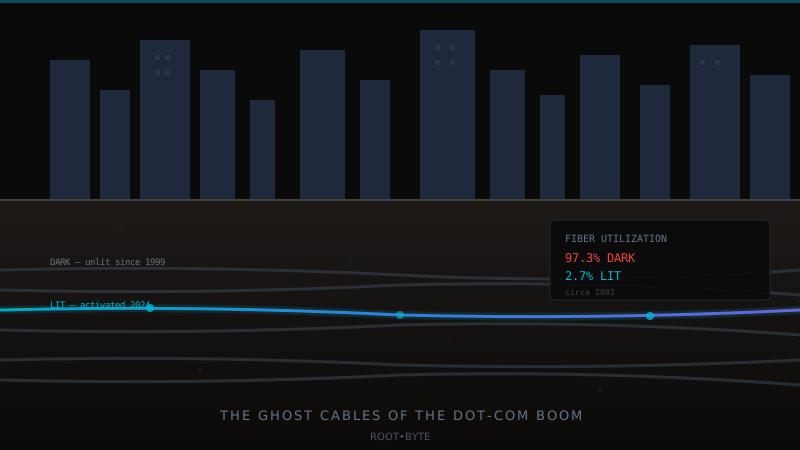
There Are Millions of Miles of Unused Cable Buried Beneath Your Feet. The Dot-Com Boom Put Them There.
During the late 1990s, telecom companies buried enough fiber-optic cable to circle the earth 1,500 times. Most of it was never used. Now, decades later, the ghost cables are finally waking up.
Coding/Apr 24, 2026/9 min
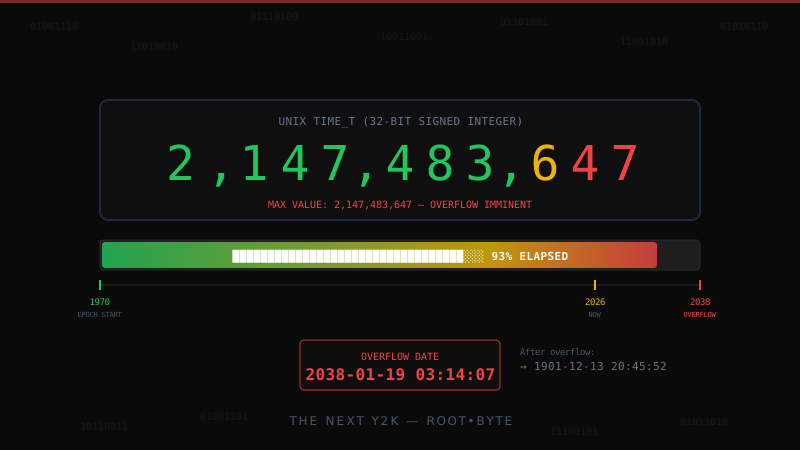
On January 19, 2038, at 03:14:07 UTC, a Lot of Software Is Going to Think It's 1901.
Y2K was the panic. The Year 2038 problem is the quiet one. An integer overflow in code written when Star Wars first hit theaters is still ticking inside billions of devices — and the deadline is getting close.
STEM/Apr 24, 2026/10 min
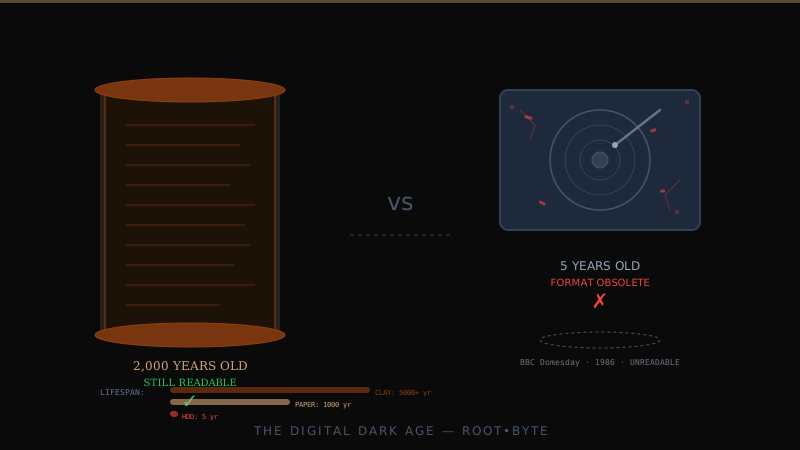
We Create More Data in a Day Than Ancient Civilizations Made in a Millennium. We're Losing It Faster Too.
Paper lasts centuries. Microfilm lasts decades. A hard drive lasts five years. We are creating the most documented civilization in history and simultaneously ensuring that most of it will vanish within a generation.
AI for Good/Apr 24, 2026/10 min
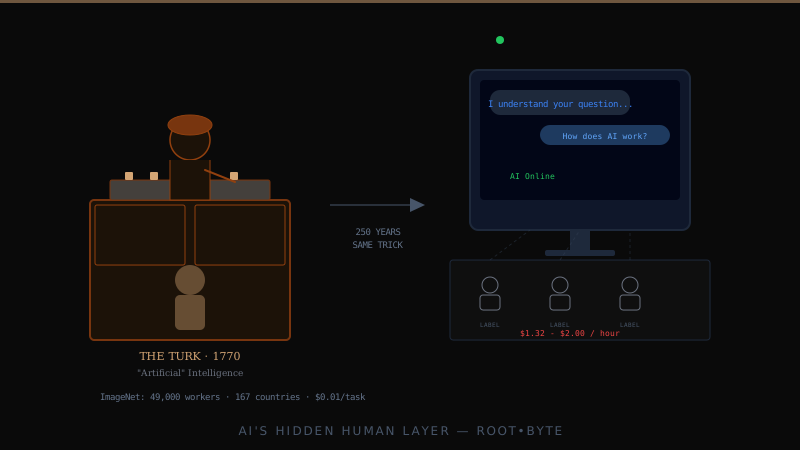
The 'Magic' of AI Is Often Just Thousands of Underpaid Humans Working in the Background.
From an 18th-century chess-playing automaton to Kenyan workers labeling AI training data for $2 per hour — the uncomfortable thread connecting 250 years of 'intelligent machines' that are secretly powered by invisible humans.
STEM/Apr 24, 2026/10 min
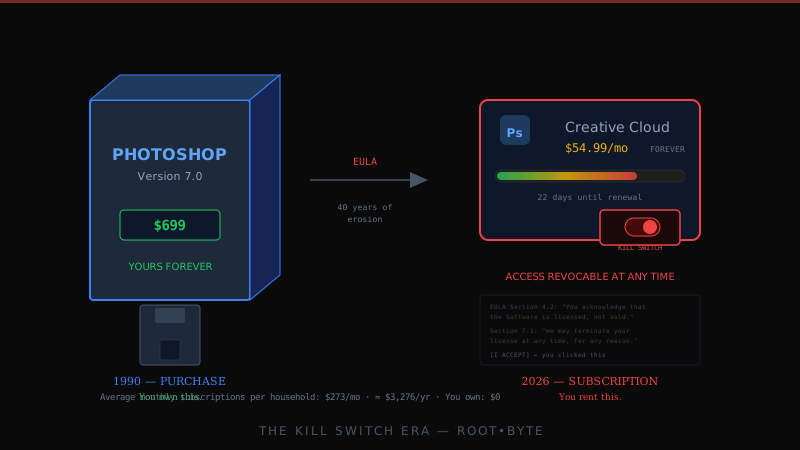
You Don't Own Your Software Anymore. You Rent It. And It Can Be Shut Off.
The shift from purchasing software to licensing it has eroded the concept of digital ownership over 40 years. You bought it. They can turn it off. And the history of how we got here is the history of the EULA.
Coding/Apr 24, 2026/10 min
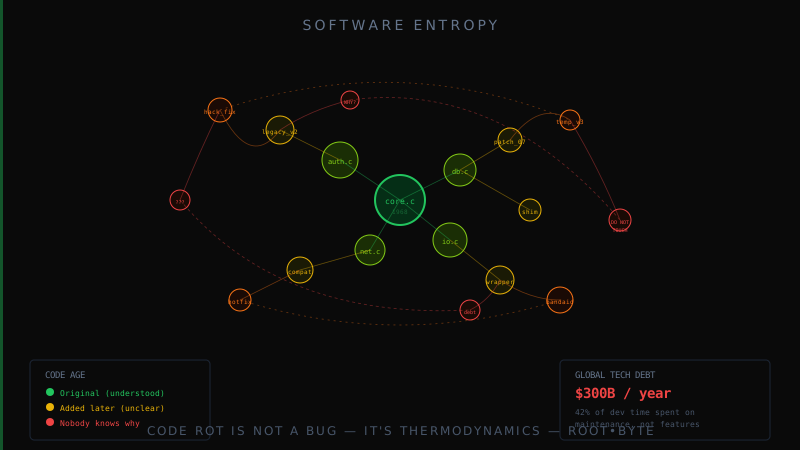
Large Software Is Not Built Like a Building. It Grows Like an Organism. And It Rots.
The most powerful software systems in the world are held together by code nobody fully understands. How does a codebase go from elegant to incomprehensible? The answer involves entropy, turnover, and the slow biological growth of digital organisms.
ai/Apr 14, 2026/9 min
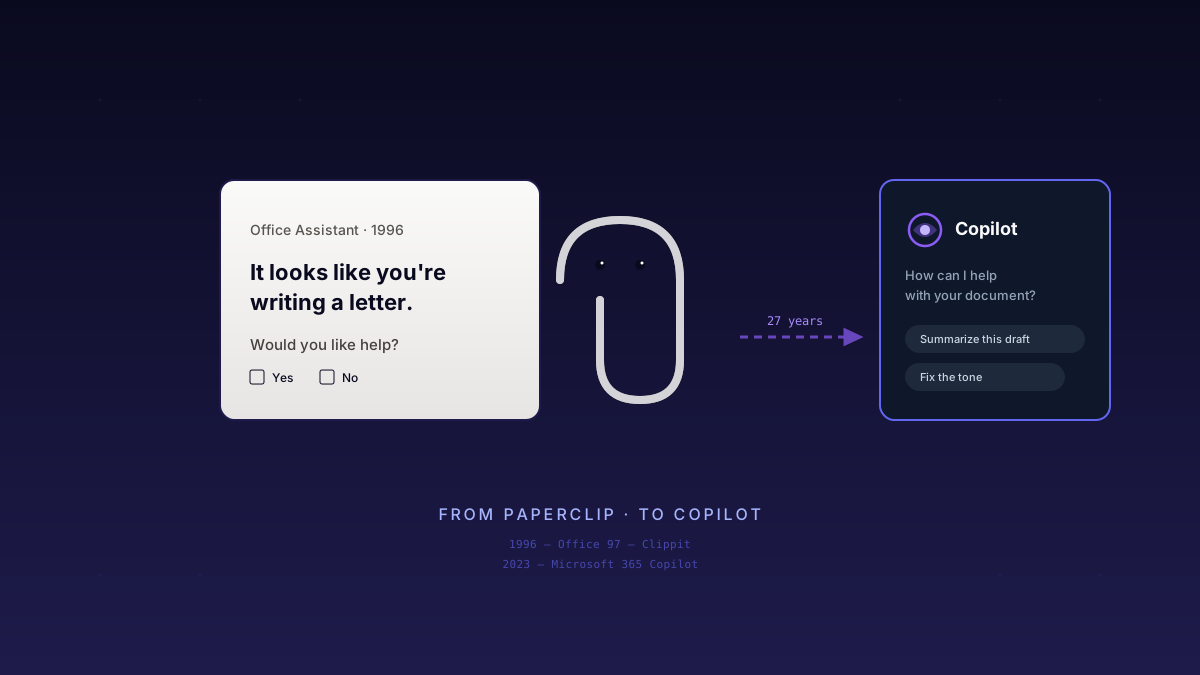
Microsoft Built the First AI Assistant in 1996. It Was Hated, Killed, and Resurrected as Copilot.
Clippy was a cartoon paperclip that watched everything you typed and offered to help. Twenty-seven years before Copilot, Microsoft shipped an AI assistant to a billion desks. Users despised it. The company has spent three decades trying to get the same idea to work.
Entertainment/Apr 14, 2026/8 min
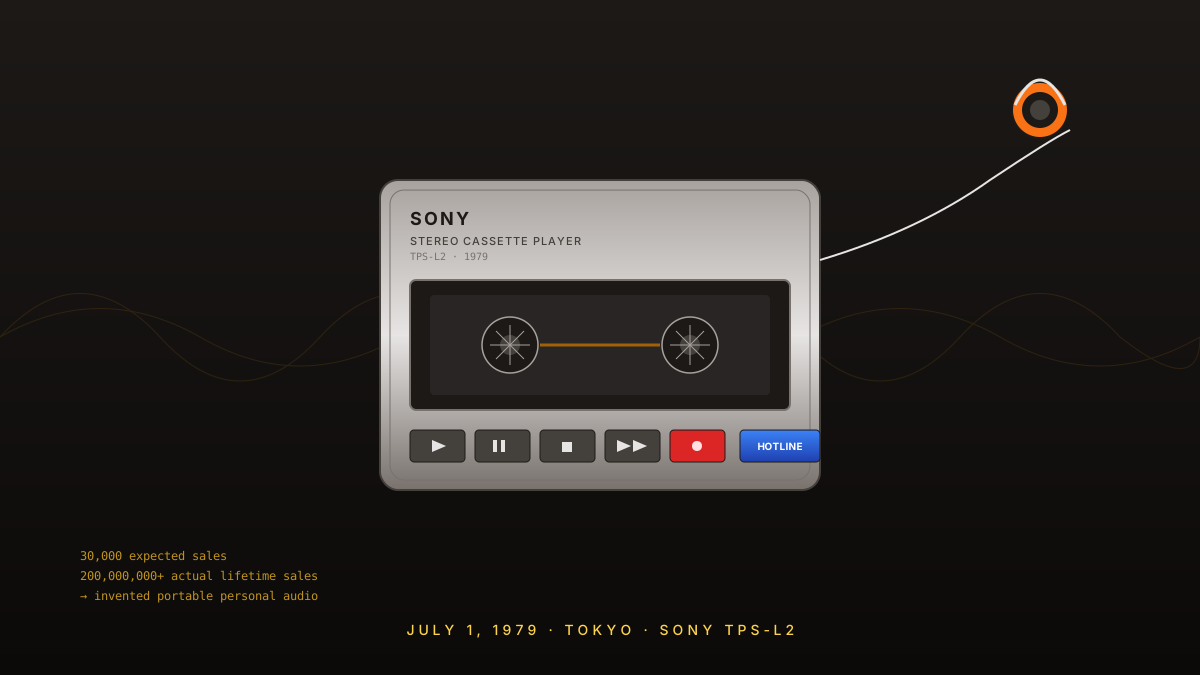
The Sony Walkman Was Supposed to Fail. Instead It Invented Personal Technology.
In July 1979, Sony shipped a $150 cassette player with no record function and no speaker. Everyone said it would flop. Every personal device you own traces back to what happened next.
ai/Apr 14, 2026/9 min
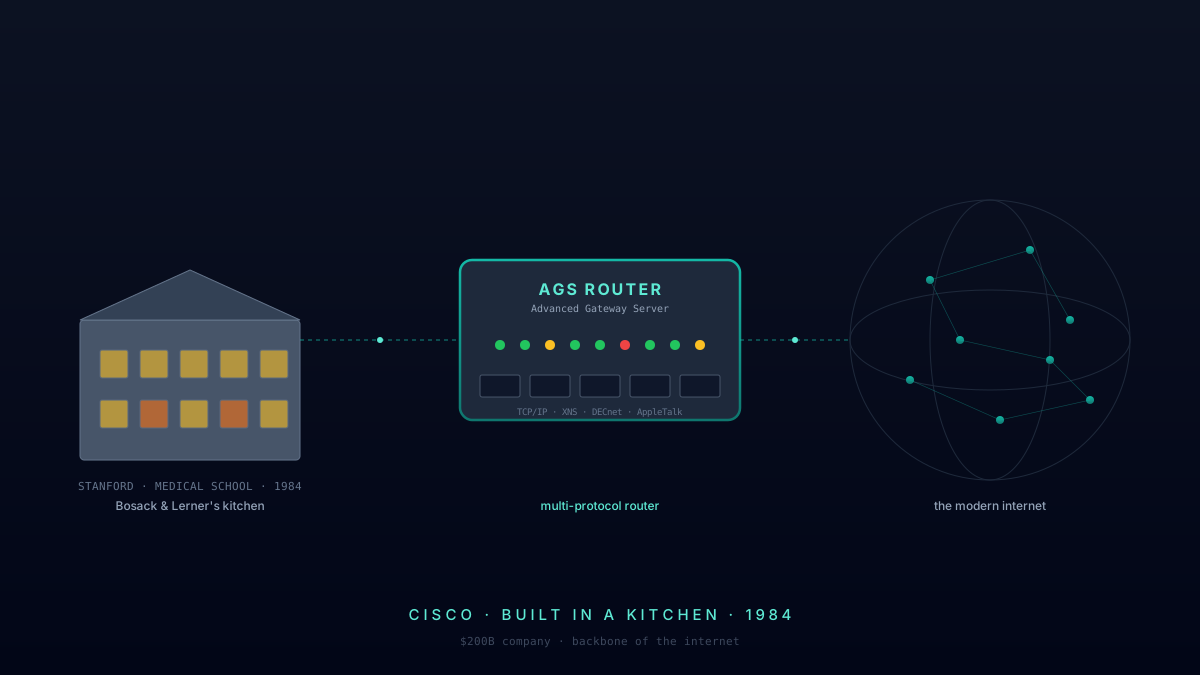
Two Stanford Staff Couldn't Send Email Between Buildings. They Built Cisco in Their Kitchen.
In 1984, two Stanford employees who wanted to send love notes between campus buildings spent their evenings assembling routers on the kitchen table. Forty years later, their company carries most of the world's internet traffic.

History/Mar 27, 2026/10 min read
An Orphan Borrowed $300K From His Cousin and Built the Company That Dethroned Tesla
BYD — Build Your Dreams — started as a battery factory run by an orphan with a borrowed loan. Today it outsells Tesla and powers homes with solar panels. This is the most unlikely empire in tech history.

history/Mar 27, 2026/7 min read
These Teenagers Built the Future While Adults Told Them They Were Too Young
From Blaise Pascal's calculator at 19 to a teenager building a nuclear fusion reactor in his garage — the biggest tech breakthroughs often came from people too young to know they were supposed to fail.
history/Mar 27, 2026/7 min read
No Degree, No Problem: The Self-Taught Coders Who Built the Tools Billions Use
Ada Lovelace wrote the first algorithm with no CS department to attend. Jan Koum built WhatsApp while on food stamps. The biggest tools in tech were built by people who taught themselves — and so can you.

history/Mar 27, 2026/7 min read
Every Tech Giant You Admire Failed Horrifically First
Edison's 10,000 experiments. Apple's near-bankruptcy. Amazon losing money for 6 straight years. SpaceX watching rockets explode. The greatest tech successes share a common origin: spectacular failure.

History/Mar 26, 2026/7 min read
Dark Mode Was the Original Mode — How Your Screen Went White and Back Again
Every screen was dark mode first. The glowing green phosphor of 1948's Manchester Baby was computing's original look — and it took 70 years to come back.

History/Mar 26, 2026/8 min read
Emoji Started as 176 Tiny Pixels in a Japanese Telecom Lab — Now They Are a Language
In 1999, a 25-year-old Japanese artist drew 176 icons on a 12×12 pixel grid for a mobile carrier. They became the fastest-adopted 'language' in human history.

History/Mar 26, 2026/7 min read
Copy-Paste Was Invented by a Man Who Hated Complexity — And It Changed Every Computer Forever
Larry Tesler believed computers should never make users feel stupid. In 1973 at Xerox PARC, he invented copy-paste — and his California license plate read 'NO MODES.'
Space/Mar 25, 2026/9 min read
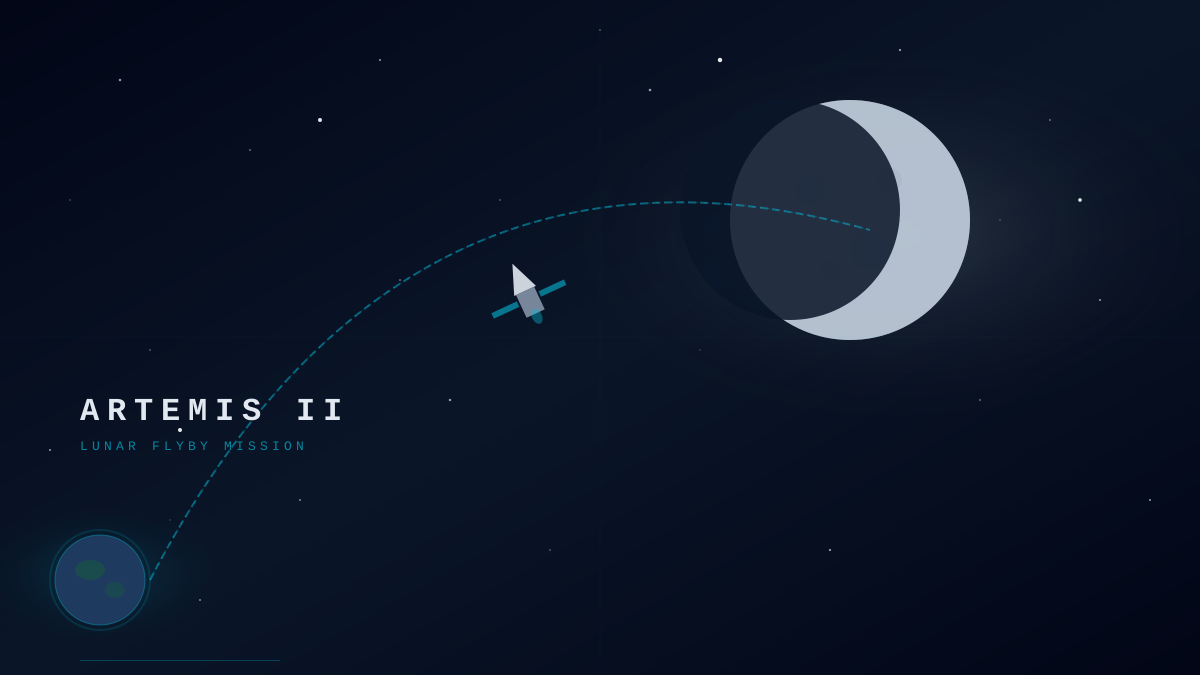
Four Astronauts Are About to Fly Around the Moon. The Last Time Humans Did This, Nixon Was President.
NASA's Artemis 2 mission is set to launch no earlier than April 1, 2026, sending four astronauts on a loop around the far side of the Moon. The first crewed deep-space voyage since Apollo 17 splashed down in December 1972. Fifty-three years of silence between Earth and the lunar horizon are about to end.

AI/Mar 25, 2026/10 min read
Twelve AI Models Launched in One Week. The Field That Produced Them Was Named at a Summer Workshop in 1956.
In the third week of March 2026, at least twelve major AI models were announced or released by OpenAI, Google, Anthropic, Meta, Mistral, and others. The velocity is unprecedented. The field itself was born when ten researchers gathered at Dartmouth College in the summer of 1956 and gave their discipline a name.
Cybersecurity/Mar 25, 2026/9 min read
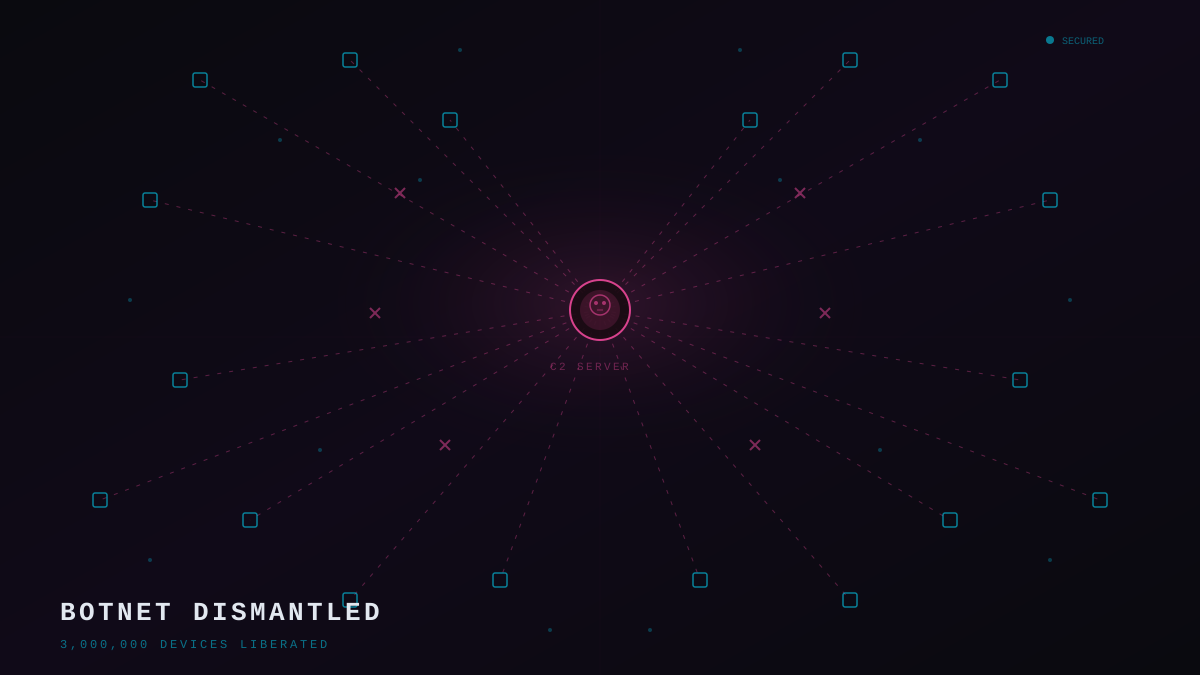
The FBI Just Freed Three Million Hacked Devices. The Concept of a Botnet Was Born on IRC in 1999.
A coordinated operation by the FBI and international law enforcement dismantled two massive IoT botnets controlling over three million compromised devices, including routers, cameras, and smart home gadgets. The concept of marshaling hijacked machines into an army dates back to IRC chat networks in 1999.
Gaming/Mar 25, 2026/8 min read
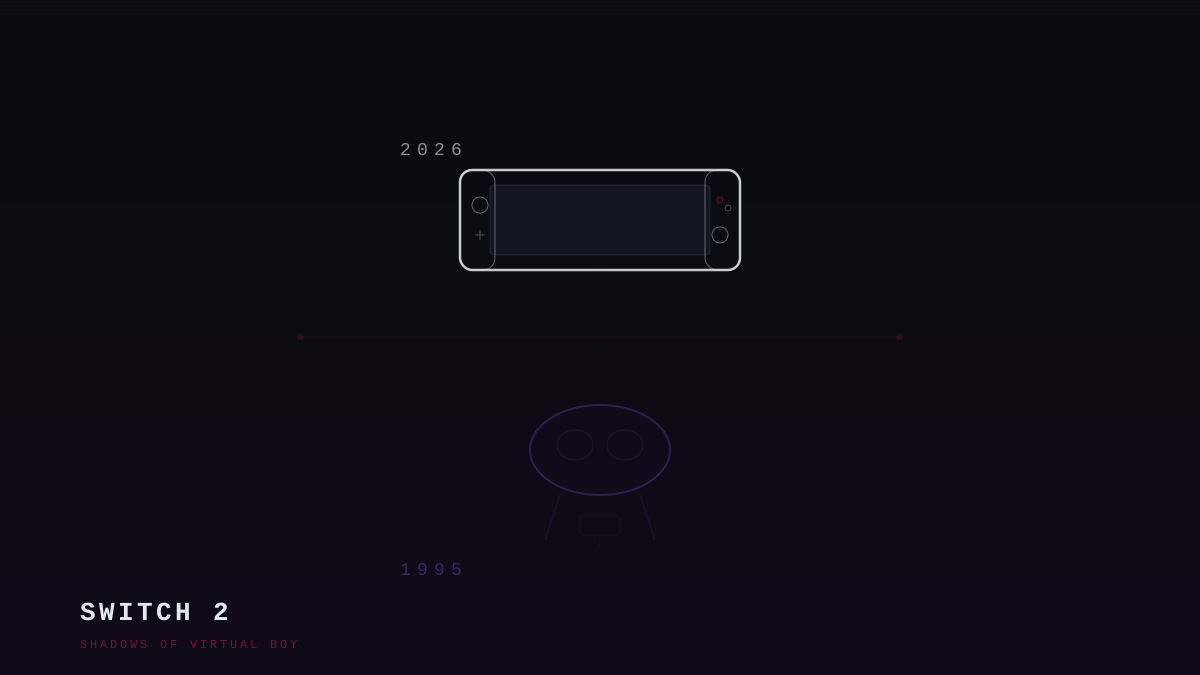
Nintendo Just Cut Switch 2 Production by 30%. The Company Has Survived Worse. It Was Founded in 1889.
Nintendo has reportedly slashed initial production targets for the Switch 2 by 30%, from an expected 16 million units to approximately 11 million for the fiscal year. The cause: US tariffs on Chinese-manufactured components and ongoing supply chain disruptions. But Nintendo has survived catastrophic product failures before. Ask the Virtual Boy.
Mobility Tech/Mar 25, 2026/9 min read
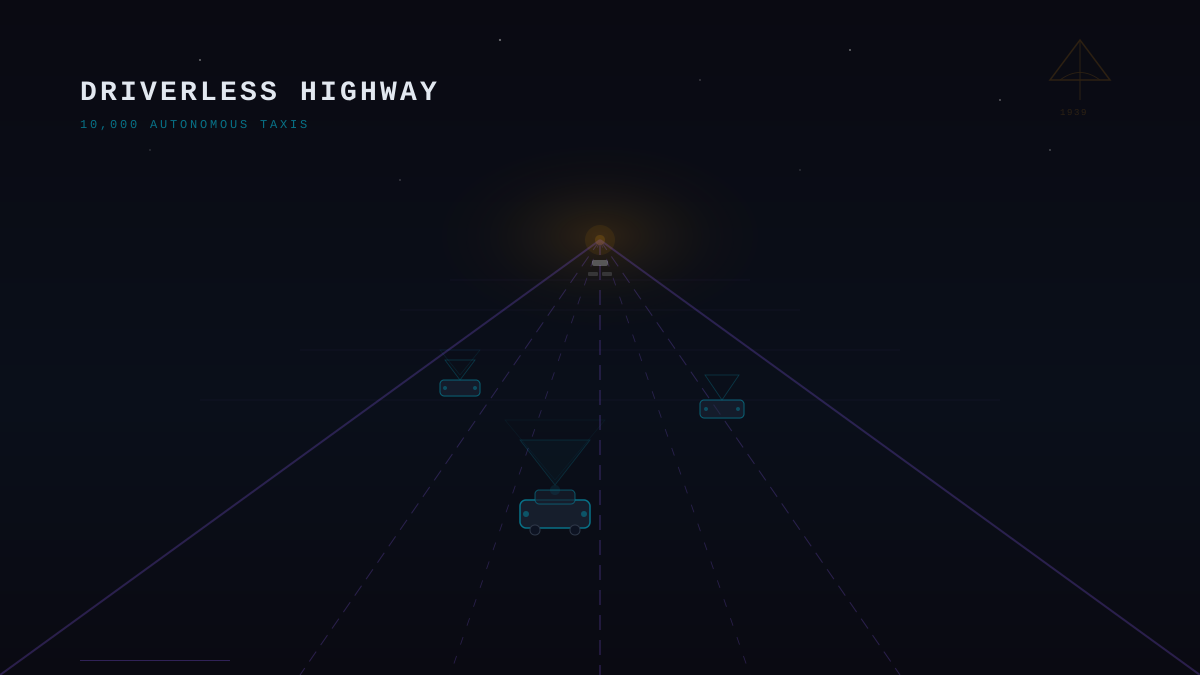
Uber Just Ordered 10,000 Driverless Taxis from Rivian. The Dream of Automated Cars Was First Sold to the Public at the 1939 World's Fair.
Uber has placed an order for 10,000 purpose-built autonomous electric vehicles from Rivian, the largest single order of driverless taxis in history. The vehicles will begin deploying in select US cities in late 2027. The idea that cars would one day drive themselves was first presented to a mass audience at the General Motors Futurama exhibit at the 1939 New York World's Fair.
Gadgets/Mar 25, 2026/8 min read
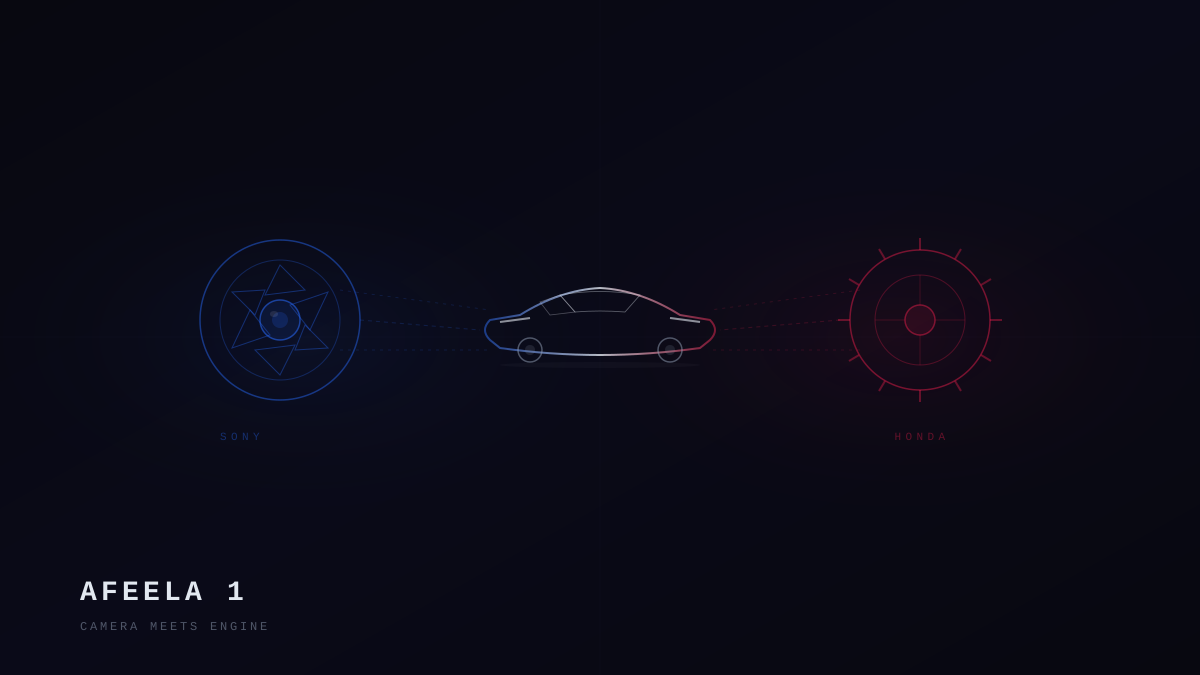
Sony Is Selling a Car Now. The Company's First Product, in 1946, Was a Rice Cooker That Didn't Cook Rice.
Sony Honda Mobility has begun accepting pre-orders for the Afeela 1, a luxury electric sedan packed with 45 sensors, an entertainment system powered by Unreal Engine 5, and Level 3 autonomous driving capability. The car is a rolling PlayStation. And it was made by a company whose very first product was a rice cooker so bad it was inedible.
Coding/Mar 25, 2026/8 min read
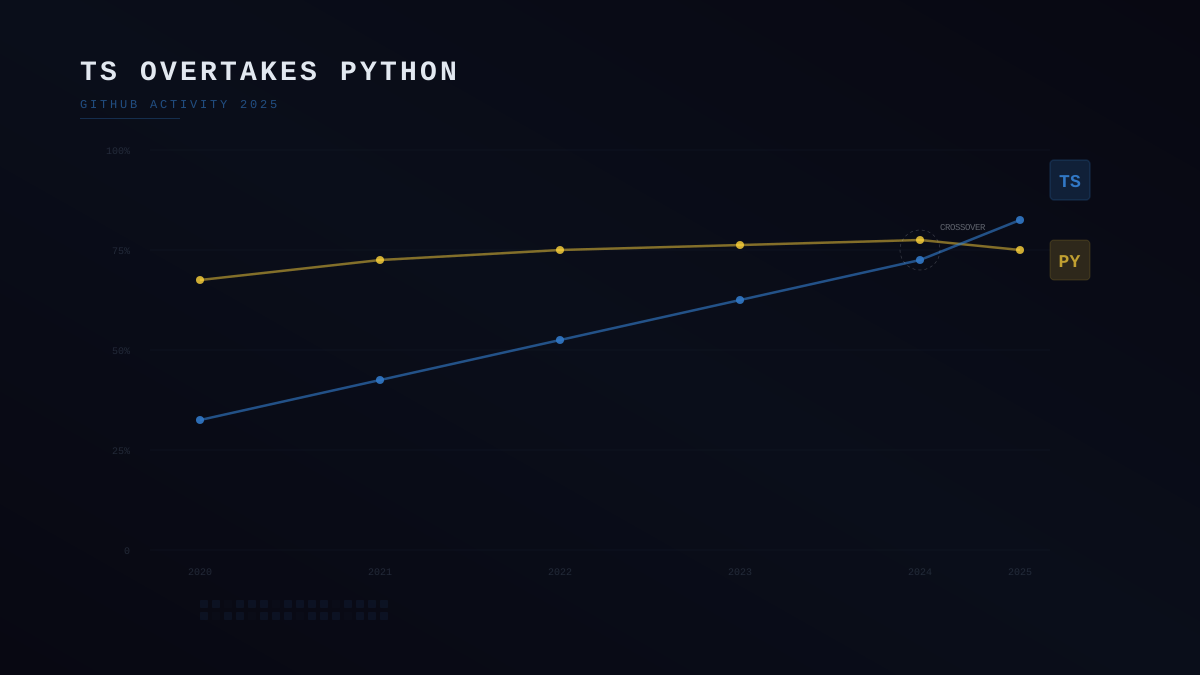
TypeScript Just Passed Python as GitHub's Most-Used Language. JavaScript, Its Parent, Was Created in 10 Days.
GitHub's 2025 year-in-review data reveals that TypeScript has overtaken Python as the most-used programming language on the platform by repository count and pull request volume. TypeScript is a typed superset of JavaScript, and JavaScript itself was famously created by Brendan Eich in just ten days in May 1995.

Cybersecurity/Mar 22, 2026/7 min read
A Co-Founder Used Hair Dryers to Remove Serial Numbers From $2.5 Billion in NVIDIA Chips. Then He Shipped Them to China.
Super Micro Computer co-founder Wally Liaw was arrested for smuggling $2.5 billion worth of NVIDIA AI chip servers to China using fake documents and dummy hardware. The case is the largest known AI chip smuggling operation and echoes Cold War technology export battles.

AI/Mar 22, 2026/8 min read
The AI Company That Said No to the Pentagon Is Now Suing the Pentagon
Anthropic refused to let Claude be used for autonomous weapons or domestic surveillance. The Pentagon responded by blacklisting the company as a 'supply chain risk.' Now Anthropic is suing the US government, and the entire AI industry is watching.

Cybersecurity/Mar 22, 2026/7 min read
Iranian Hackers Used Microsoft's Own Security Tool to Destroy a Medical Device Company's Data
An Iranian-linked hacking group deployed wiper malware through Microsoft Intune, the endpoint management tool that companies use to protect their devices. Stryker, a $100 billion medical technology company, lost data permanently. The attack follows a lineage from Shamoon to NotPetya to the most dangerous category of cyberweapon: the kind that destroys instead of steals.

History/Mar 22, 2026/9 min read
The Telephone Turns 150. It Took 75 Years to Reach Half of America. AI Took 2 Months.
On March 7, 1876, Alexander Graham Bell received the patent for the telephone. On March 10, he made the first call. 150 years later, the device he invented sits in every pocket on earth, and the speed at which new technologies are adopted has compressed from decades to days.

Entertainment/Mar 20, 2026/8 min read
People Play Video Games as Fast as Possible for a Living. The Root Goes Back to a 1993 Doom Recording.
Speedrunning started with Doom demo recordings shared on Usenet in 1993. Today it fills convention halls, raises millions for charity, and pays top runners six-figure incomes. How beating games absurdly fast became a real career.
Mobility Tech/Mar 20, 2026/9 min read
The Electric Car Was Invented in 1832. Then Oil Killed It for 100 Years.
Electric cars outsold gasoline cars in 1900. Then the oil industry, cheap gas, and Henry Ford's assembly line buried them for a century. The 2020s revival isn't innovation. It's resurrection.
History/Mar 20, 2026/9 min read
The Woman Who Named the Internet
Every website you visit ends in .com, .edu, .org, or .net. The person who decided that system is a woman named Elizabeth 'Jake' Feinler. She ran the internet's first phone book from a small office at Stanford. Almost nobody knows her name.

Entertainment/Mar 19, 2026/7 min read
The First Internet Meme Was Made in 1996. Now Memes Drive a $100 Billion Creator Economy.
From Dancing Baby to Distracted Boyfriend to AI-generated absurdity. How a silly animated GIF in 1996 evolved into a communication system that shapes elections, moves stock prices, and generates billions in ad revenue.
Coding/Mar 19, 2026/8 min read
The Code That Runs Your Bank Was Written Before You Were Born. Nobody Alive Fully Understands It.
95% of ATM transactions still run through COBOL code. The average COBOL programmer is over 60. When they retire, billions of lines of critical infrastructure become code that nobody alive fully understands. This is the quiet crisis nobody's talking about.
AI/Mar 18, 2026/8 min read
Robot Dogs Are Guarding America's Data Centers. Their Ancestors Were Built for War.
Boston Dynamics' $300,000 robot dogs now patrol the data centers that power ChatGPT and Gemini. But Spot's roots trace back to a DARPA-funded war machine called BigDog, and further still, to a 2,500-year-old idea about mechanical guardians.

Cybersecurity/Mar 18, 2026/9 min read
Someone Poisoned Hundreds of Python Repos. The Trick Is 2,500 Years Old.
The GlassWorm malware campaign used stolen GitHub tokens to inject malicious code into hundreds of trusted Python repositories, Django apps, ML research, PyPI packages. It's the same strategy the Greeks used to destroy Troy.

AI/Mar 18, 2026/10 min read
NVIDIA GTC 2026: The Week AI Officially Became a Trillion-Dollar Industry
Jensen Huang stood on stage in San Jose and said the words: one trillion dollars. NVIDIA's GTC 2026 keynote unveiled Vera Rubin chips, the Groq acquisition, physical AI with Disney, and autonomous vehicles in 28 cities. The GPU that started as a gaming chip in 1999 just ate the world.

AI for Good/Mar 15, 2026/11 min read
AI Is Saving Lives in War Zones, Not Just Taking Them. The Root Goes Back to a Red Cross Filing Cabinet.
While headlines focus on killer drones and autonomous weapons, AI is quietly doing something extraordinary in war zones: finding landmines in 0.2 seconds, reconnecting 7,000 separated families, translating for 609,000 refugees, and predicting famine 60 days before it hits.

STEM/Mar 14, 2026/9 min read
Pi Has Been Chased for 4,000 Years. We Still Can't Catch It. Happy Pi Day.
Today is 3/14, Pi Day. The number that hides in your GPS, your MRI, the shape of rivers, and the fabric of spacetime itself. Its root goes back to a Babylonian clay tablet from 1900 BC.

Coding/Mar 14, 2026/8 min read
Object-Oriented Programming Was Invented to Simulate the Real World, Then It Took Over the Real World
In 1967, two Norwegian scientists built a programming language to simulate ships. They accidentally invented the paradigm that now powers 80% of all software on Earth.

Coding/Mar 14, 2026/7 min read
Agent-Oriented Programming Was a Failed Academic Idea in 1993, Now AI Is Making It the Future of Code
In 1993, Yoav Shoham proposed that programs should be built from autonomous agents with beliefs, desires, and intentions. Nobody cared. Thirty years later, we're building exactly that, and calling it the AI revolution.

STEM/Mar 14, 2026/10 min read
Quantum Computers Operate Colder Than Outer Space. The Root Goes Back to a 1981 Rant by Richard Feynman.
Google's Willow chip performed a calculation in 5 minutes that would take a classical supercomputer 10 septillion years. The idea that got us here started with Richard Feynman complaining that nature isn't classical.

History/Mar 14, 2026/9 min read
THAAD Hits Missiles at Mach 8 With No Warhead. The Root Goes Back to a 1954 Anti-Aircraft Missile Called Nike.
THAAD destroys incoming ballistic missiles by slamming into them at Mach 8, no explosives, no warhead, pure kinetic energy. The idea of hitting a bullet with a bullet traces back 70 years to a Cold War program called Nike.

Gadgets/Mar 13, 2026/9 min read
BitChat Lets You Text Without Internet or Cell Service. The Root Goes Back to a 1901 Wireless Signal Across the Atlantic.
When Hurricane Maria destroyed Puerto Rico's cell towers in 2017, ham radio operators were the only ones who could communicate. Today, apps like BitChat, Briar, and Meshtastic are making off-grid messaging available to everyone.

Gadgets/Mar 12, 2026/8 min read
Apple Called It the MacBook Neo. But What Does 'Neo' Actually Mean, and Why Does It Keep Showing Up Everywhere?
Apple's $599 MacBook Neo is the cheapest Mac ever made. But the real story isn't the price. It's the word. 'Neo' has been shaping how we think about the future for over 2,000 years.

History/Mar 11, 2026/6 min read
Rust Was Born From a Broken Elevator, Now It's Replacing C in the Linux Kernel
In 2006, Mozilla engineer Graydon Hoare came home to find his building's elevator had crashed, its software had failed. His frustration sparked a language that's now rewriting the foundations of computing.
History/Mar 11, 2026/5 min read
Python Started as a Christmas Holiday Project, Now It Runs the AI Revolution
In December 1989, a Dutch programmer bored during Christmas break started writing a new language. He named it after Monty Python. Today, Python is the #1 language in the world and the backbone of every major AI system.

Coding/Mar 11, 2026/5 min read
TypeScript Ate JavaScript's Lunch: How a 2012 Side Project Became the Web Standard
Brendan Eich built JavaScript in 10 days in 1995. Anders Hejlsberg built TypeScript to fix it in 2012. By 2026, writing plain JavaScript for a professional project is considered legacy.
Coding/Mar 11, 2026/5 min read
OpenAI Bought Its Own Bug Finder, Grace Hopper Found the First Bug in 1947
On September 9, 1947, Grace Hopper's team taped a moth into a logbook, the first computer 'bug.' In 2026, OpenAI acquired Promptfoo to find bugs in AI agents. The oldest problem in computing just got harder.

Entertainment/Mar 11, 2026/5 min read
The Smart Ring Keeps Coming Back From the Dead, From NFC Ring to AI-on-Your-Finger
The smart ring has failed and been reborn three times. NFC unlocking in 2013, health tracking in 2015, and now, at CES 2026, Pebble put an AI assistant on your finger that talks back.

Entertainment/Mar 11, 2026/5 min read
Robot Vacuums Can Finally Climb Stairs, It Only Took 60 Years Since Shakey the Robot
In 1966, Stanford built Shakey, the first robot that could navigate rooms and reason about obstacles. At CES 2026, robot vacuums finally learned to climb stairs. Six decades for one flight of steps.

Mobility Tech/Mar 11, 2026/6 min read
DARPA's Self-Driving Cars All Failed in 2004, Now Waymo Does 450,000 Rides a Week
On March 13, 2004, DARPA invited teams to race autonomous vehicles across the Mojave Desert. Every single car failed. Twenty-two years later, Waymo completes 450,000 autonomous rides every week.

Mobility Tech/Mar 11, 2026/5 min read
Autonomous Trucks Are Coming for 3.5 Million Jobs, The Teamsters Union Was Born to Fight This
The Teamsters union was founded in 1903 to protect horse-drawn teamsters from mechanization. At CES 2026, Bosch and Kodiak unveiled Level 4 driverless semi-trucks. The cycle repeats.

Gaming/Mar 11, 2026/5 min read
LEGO Smart Bricks Have Sensors Inside, The Root Goes Back to Seymour Papert's 1980 Vision
At CES 2026, LEGO showed bricks with embedded sensors and accelerometers. The concept of computing inside toys traces directly to Seymour Papert, the MIT professor who wrote the book called 'Mindstorms' in 1980.

Gaming/Mar 11, 2026/5 min read
Rollable Laptop Screens Are Re-Inventing the Scroll, The Oldest Display Format in History
Scrolls were the dominant display format for 3,000 years before the bound book replaced them. At CES 2026, Lenovo and LG showed rollable laptop screens. We're going back to the scroll, with OLED.

AI for Good/Mar 11, 2026/6 min read
Amazon Cut 16,000 Jobs Citing AI, The Luddites Fought This Same Battle in 1811
In January 2026, Amazon cut 16,000 corporate jobs, explicitly citing AI automation. In 1811, English textile workers smashed mechanized looms in the same fight. The Luddites weren't anti-technology, they were anti-exploitation.

AI for Good/Mar 11, 2026/6 min read
Yann LeCun Left Meta to Build a Brain, The Theory Behind It Came From a 1943 Book
In late 2025, Yann LeCun left Meta to found AMI Labs, raising over $1 billion, Europe's largest-ever seed round. His bet: LLMs are a dead end. The real AI breakthrough will come from 'world models', a concept first described by a Scottish psychologist in 1943.

Cybersecurity/Mar 11, 2026/5 min read
Hackers Now Break Out in 29 Minutes, Kevin Mitnick Took Months
Kevin Mitnick, the most famous hacker of the 1990s, spent months on his intrusions. CrowdStrike's 2026 report shows the average breakout time is now 29 minutes, a 65% speed increase in two years. AI made it faster.
Cybersecurity/Mar 11, 2026/5 min read
Deepfakes Went From a Reddit Hobby in 2017 to a State Weapon in 2026
A Reddit user coined the term 'deepfake' in late 2017 while using AI to swap faces in videos. By 2026, the technology is being used in state-level information warfare and social engineering attacks that are 'cheap, fast, and nearly undetectable.'
AI/Mar 11, 2026/10 min read
The AI Company That Said No to the Pentagon, Anthropic, Claude, and the Roots of AI Safety
In 2021, two siblings walked away from the most powerful AI lab on Earth to build one that prioritized safety. Five years later, their company is worth $380 billion, and suing the Pentagon.
Mobility Tech/Mar 9, 2026/7 min read
Electric Cars Existed 50 Years Before Gasoline Ones, Then the World Forgot
In 1900, 38% of American cars were electric. By 1935, they were gone. The electric car didn't fail because it was bad technology, it failed because gasoline got cheap and Henry Ford got efficient.

Mobility Tech/Mar 9, 2026/5 min read
Ride-Sharing Was Invented During World War I, Not by Uber
The US government mandated ride-sharing to conserve rubber during WWI. By the 1970s, 23% of American commuters carpooled. Uber just put it on a phone.

Mobility Tech/Mar 9, 2026/5 min read
The E-Scooter Invasion Traces Back to a 1915 'Autoped' That Suffragettes Rode
Before Lime and Bird flooded cities with electric scooters, the motorized scooter was invented in 1915. Suffragette Florence Norman rode one to work in London. Lady Norman was ahead by a century.
Gaming/Mar 9, 2026/6 min read
The First Esports Tournament Was Held at Stanford in 1972, The Prize Was a Rolling Stone Subscription
On October 19, 1972, Stanford students competed in the 'Intergalactic Spacewar Olympics.' The winner got a year of Rolling Stone magazine. Today, esports prizes exceed $40 million per tournament.

Gaming/Mar 9, 2026/6 min read
The Engine Inside Doom (1993) Built the Foundation for Every Game You Play Today
John Carmack's Doom engine in 1993 proved that game code could be separated from game content. That idea, the 'game engine', now powers 90% of all video games ever made.

Entertainment/Mar 9, 2026/5 min read
Podcasting Was Invented by an MTV VJ Who Hacked RSS to Send Audio to iPods
In 2004, former MTV VJ Adam Curry wrote an AppleScript that automatically downloaded audio files from RSS feeds to his iPod. He called it iPodder. The medium it created now has 500 million listeners.

Entertainment/Mar 9, 2026/6 min read
A 19-Year-Old in a Dorm Room Built Napster and Accidentally Invented Music Streaming
In 1999, Shawn Fanning wrote Napster in his Northeastern University dorm room. At its peak, 80 million people used it. The music industry killed it, then spent 15 years trying to reinvent it.

Space/Mar 9, 2026/6 min read
NASA's First Mars Rover Was the Size of a Microwave. Now They're SUVs with Helicopters.
In 1997, NASA landed a microwave-sized robot named after abolitionist Sojourner Truth on Mars. It was meant to last 7 days. It lasted 83. Now we have car-sized rovers with drone helicopters.

Space/Mar 9, 2026/6 min read
The First Space Station Was a Soviet Secret That Ended in Tragedy, Now 7 Nations Share One
In 1971, the Soviet Union launched Salyut 1, the first space station. Its first crew died during reentry. 55 years later, the ISS has hosted 280+ astronauts from 22 countries in continuous occupation since 2000.

AI for Good/Mar 8, 2026/7 min read
AI Is Now Detecting Wildfires Within 10 Minutes of Ignition. The Root of Fire Lookouts Goes Back to the Roman Empire.
ALERTCalifornia's AI camera network detects wildfires within minutes using 1,100+ mountain cameras and machine learning. The tradition of watching for fire from high ground stretches back 2,000 years.

AI for Good/Mar 8, 2026/7 min read
AI Can Now Translate Sign Language in Real Time. The Fight for Deaf Communication Rights Is 250 Years Old.
Google and startups like SignAll are building AI systems that translate sign language to text in real time. The struggle for deaf people to communicate on equal terms traces back to 1760 Paris.

AI for Good/Mar 8, 2026/6 min read
Google's AI Can Now Predict Floods 7 Days in Advance for 80 Countries. The Root of Flood Warning Goes Back to Ancient Egypt.
Google's Flood Hub uses AI to provide 7-day flood forecasts for 80+ countries, covering 460 million people. Humans have been trying to predict floods since the Nilometer was built 5,000 years ago.

AI for Good/Mar 8, 2026/7 min read
AI Is Ending the 'Diagnostic Odyssey', Identifying Rare Diseases in Children That Doctors Missed for Years. The Root Goes to a 16th-Century Swiss Alchemist.
Face2Gene and similar AI tools can identify rare genetic diseases from a photo of a child's face. For the 300 million people worldwide with rare diseases, the average time to diagnosis is 5 years. AI is cutting that to days.
AI for Good/Mar 8, 2026/7 min read
AI Is Racing to Save the 3,000 Languages That Will Die This Century. The Root of Language Death Goes Back to Empire.
Every two weeks, a language dies. AI tools are now helping linguists and indigenous communities document, teach, and revitalize languages before the last speakers are gone. The pattern of language death is as old as conquest itself.

Gaming/Mar 7, 2026/7 min read
There's Now a Video Game Where You Play as a Karen Destroying a Mall. Here's How a Baby Name Became the Internet's Favorite Insult.
KAREN the video game lets you wreck a shopping mall with slaps, Mega Yelps, and expired coupons. But the real story is how a Scandinavian baby name from the 1960s became the internet's most loaded four letters.

Entertainment/Mar 7, 2026/6 min read
RootByte Just Added Podcast Mode. Two AI Hosts Will Discuss Any Article, While You Listen.
Every article on RootByte now has a play button. Click it, and two AI hosts named Alex and Sam will have a real conversation about the story, complete with reactions, jokes, and genuine surprise. No pre-recording. No human voice actors. Generated in real-time.
AI/Mar 7, 2026/8 min read
China Just Built a Trillion-Parameter AI and Gave It Away for Free. The Root Goes Back to a Victorian Counting Machine.
DeepSeek V4 packs 1 trillion parameters but only activates 32 billion per query, running frontier AI at 1/50th the cost of GPT-5. The root of all neural networks traces back to a drawing room in 1837.
Cybersecurity/Mar 7, 2026/8 min read
Two Cybersecurity Experts Were Secretly Running Ransomware Attacks on the Companies They Were Hired to Protect. The History of Double Agents Goes Back Centuries.
Ryan Goldberg and Kevin Martin worked at cybersecurity firms by day. At night, they deployed BlackCat ransomware against American businesses, causing $9.5M in losses. The betrayal pattern is 2,500 years old.

Gadgets/Mar 7, 2026/7 min read
Smart Glasses Are About to Replace Your Phone. The Root Goes Back to a 13th-Century Italian Monk.
Smart glasses sales quadrupled in 2026. Meta sold 2 million Ray-Ban pairs. Snap is launching AR glasses. But the idea of putting technology on your face started in a monastery in Pisa, around 1286.

Gaming/Mar 7, 2026/7 min read
Slay the Spire 2 Hit 340,000 Players on Day One. The Deck It's Built On Is 1,000 Years Old.
Slay the Spire 2 launched in Early Access on March 5 and immediately became one of Steam's biggest hits ever. But the deckbuilder genre traces back to Tang Dynasty China, a Japanese dungeon, and a PhD thesis.

Space/Mar 7, 2026/7 min read
A Telescope in South Africa Just Detected a 'Cosmic Laser' 8 Billion Light-Years Away. The Root Goes Back to Einstein's 1917 Thought Experiment.
South Africa's MeerKAT telescope found the most distant 'space laser' ever, a hydroxyl gigamaser in a merging galaxy 8 billion light-years away. The physics behind it traces to a 1917 paper by Albert Einstein.

Space/Mar 6, 2026/6 min read
Voyager 1 Carries a Golden Record for Aliens, and It's Now 15 Billion Miles from Home
In 1977, NASA launched a spacecraft with a gold-plated record containing sounds of Earth, thunder, whale songs, Chuck Berry, and greetings in 55 languages. It's now the farthest human-made object in existence.
Space/Mar 6, 2026/5 min read
The Hubble Telescope Launched with a Blurry Mirror, and NASA Fixed It in Orbit with Glasses
When NASA's $1.5 billion telescope sent back its first images in 1990, they were blurry. The mirror was ground wrong by 1/50th the width of a human hair. The fix? Give the telescope corrective lenses, in space.

Space/Mar 6, 2026/6 min read
The Computer That Landed on the Moon Had Less Power Than a Modern Calculator
The Apollo Guidance Computer had 74KB of memory and ran at 0.043 MHz. Your smartphone is 100 million times more powerful. Yet it navigated astronauts to the Moon and back, and the software that saved the mission was written by a woman.

Space/Mar 6, 2026/5 min read
The ISS Cost $150 Billion and Has Been Falling Around Earth for 25 Years, On Purpose
The International Space Station is the most expensive single object ever built. It orbits at 17,500 mph, has been continuously occupied since 2000, and it's technically in a constant state of free fall.

Entertainment/Mar 6, 2026/6 min read
Netflix Offered to Sell Itself to Blockbuster for $50 Million. Blockbuster Laughed.
In 2000, Netflix was a struggling DVD-by-mail startup burning cash. It offered to become Blockbuster's online division. Blockbuster's CEO reportedly laughed them out of the room. Netflix is now worth $350 billion.

Entertainment/Mar 6, 2026/5 min read
Pixar Nearly Went Bankrupt Selling Computers. Steve Jobs Lost $50 Million Before Toy Story Saved Everything.
Before Pixar made Toy Story, it was a failing hardware company hemorrhaging Steve Jobs' money. The first fully CGI feature film wasn't just an animation milestone, it was a desperate Hail Mary.

Entertainment/Mar 6, 2026/5 min read
Nintendo Made Playing Cards for 77 Years, Ran a Love Hotel, and Sold Rice, Before Making Mario
Before the Game Boy and Mario, Nintendo was a playing card company founded in 1889. It also tried taxi services, instant rice, a TV network, and love hotels before finding its way to video games.
Entertainment/Mar 6, 2026/5 min read
Spotify Was Built in the Piracy Capital of the World, by Founders Who Wanted to Make Piracy Unnecessary
Sweden was the home of The Pirate Bay and the world's highest music piracy rates. Two Swedish entrepreneurs decided the best way to fight piracy wasn't lawsuits, it was building something better.

Coding/Mar 6, 2026/6 min read
Python Is Named After a Comedy Show, Not a Snake, and It Was Designed to Be Boring
Guido van Rossum created Python over Christmas break in 1989 because he was bored. He named it after Monty Python's Flying Circus. It became the world's most popular programming language by being deliberately simple.

Coding/Mar 6, 2026/6 min read
JavaScript Was Created in 10 Days, and Now It Runs the Entire Internet
In May 1995, Brendan Eich was given 10 days to create a programming language for Netscape's browser. The result, originally called Mocha, is now the most widely deployed programming language in human history.

Coding/Mar 6, 2026/5 min read
C Was Created to Rewrite an Operating System, and Ended Up Powering Almost Everything
Dennis Ritchie created C in 1972 because he needed a language fast enough for an OS but portable enough to run on different machines. 54 years later, C is still in your phone, car, TV, and pacemaker.

Coding/Mar 6, 2026/5 min read
Rust Was Created Because 70% of All Security Bugs Come from One Type of Error, and C Can't Fix It
Microsoft, Google, and Apple all reported that roughly 70% of their security vulnerabilities come from memory safety bugs in C and C++. Rust was designed to make those bugs impossible, without sacrificing speed.

Coding/Mar 6, 2026/7 min read
Every Programming Language You Know Has Grandparents, Here's the Complete Family Tree
From FORTRAN (1957) to Rust (2015), every major programming language borrowed ideas from the ones that came before. Here's the family tree that connects them all.

Coding/Mar 6, 2026/3 min read
'Hello, World', The Two-Word Tradition That Every Programmer Follows but Nobody Remembers Why
Every programmer's first program prints 'Hello, World.' The tradition dates to 1972 when Brian Kernighan used it in a Bell Labs tutorial. 54 years later, it's still the universal first step into coding.

History/Mar 6, 2026/6 min read
IBM Built a Smartphone in 1994. It Had a Touchscreen, Apps, and Email, 13 Years Before the iPhone.
In 1994, IBM and BellSouth released a phone with a touchscreen, calendar, email, and fax. It cost $899, weighed over a pound, and died after one hour of talk time. Only 50,000 were sold.

History/Mar 6, 2026/5 min read
LG Built a $20,000 Fridge That Could Send Email. Nobody Wanted It.
In 2000, LG's Internet Digital DIOS fridge had a 15-inch touchscreen, an 800 MHz processor, a CD-ROM drive, and a web browser. It cost $20,000 and solved exactly zero kitchen problems.
History/Mar 6, 2026/7 min read
In 1966, a 200-Line Program Fooled People into Thinking a Computer Understood Them. We're Still Falling for It.
Joseph Weizenbaum's ELIZA used simple pattern matching to mimic a therapist. It had no understanding, no memory, no intelligence. His own secretary asked him to leave the room so she could talk to it privately.
Gaming/Mar 6, 2026/6 min read
Nintendo's Virtual Boy Gave People Headaches and Killed VR for a Decade. Modern VR Exists Because of It.
In 1995, Nintendo released a VR headset that displayed only red, required a tabletop stand, and caused nausea. It sold 770,000 units, was discontinued in a year, and scared the industry away from VR until 2012.
History/Mar 6, 2026/6 min read
Friendster Had 115 Million Users and Turned Down Google. Then Its Servers Crashed and Facebook Took Over.
Friendster invented the social network formula in 2003, profiles, friends, feeds. It grew to 115 million users. But 40-second page loads drove users to MySpace, then Facebook. Google offered to buy it. The founder said no.

History/Mar 6, 2026/5 min read
Seiko Built a Smartwatch That Ran Apps in 2000. Apple Waited 15 Years to Do the Same Thing.
The Seiko Ruputer had a touchscreen, ran downloadable apps, synced with PCs, and even had games. It cost $399 in 2000. Outside Japan, almost nobody knew it existed.

History/Mar 6, 2026/7 min read
A Kodak Engineer Invented the Digital Camera in 1975. Kodak Buried It to Protect Film Sales.
In 1975, 24-year-old Kodak engineer Steven Sasson built the first digital camera. It weighed 8 pounds, took 23 seconds per photo, and stored images on cassette tape. Kodak's response: 'That's cute, but don't tell anyone.'

History/Mar 6, 2026/6 min read
The First Portable Computer Weighed 24 Pounds, Had a 5-Inch Screen, and Sold 10,000 Units a Month.
In April 1981, Adam Osborne released the first commercially successful portable computer. It weighed 24.5 pounds, had a 5-inch CRT screen, and came with $1,500 worth of bundled software for $1,795. Then he killed his own company.
Gaming/Mar 6, 2026/7 min read
The First Video Game Console Was Invented by a Man Escaping Nazi Germany. Most People Think Atari Did It.
Ralph Baer, a German Jewish refugee, invented the first home video game console in 1967. Magnavox sold it as the Odyssey in 1972. It had no sound, no score display, and used plastic overlays on the TV. Atari gets the credit.
History/Mar 6, 2026/6 min read
The First MP3 Player Was Sued by the Music Industry Before It Even Shipped. The Industry Lost.
In 1998, Diamond Multimedia released the Rio PMP300, a $200 device that held 12 songs. The RIAA sued to block it before launch. A federal court ruled in Diamond's favor, legalizing portable digital music.

History/Mar 6, 2026/6 min read
Amazon Built a Speaker That Listens to Everything You Say. 500 Million People Invited It Into Their Homes.
In 2014, Amazon released a cylindrical speaker with 7 always-on microphones and a cloud AI named Alexa. Critics called it a surveillance device. Consumers made it the fastest-selling product in Amazon history.

Entertainment/Mar 6, 2026/8 min read
POW! RootByte Launches Comics Mode, And the 200-Year History Behind It
RootByte is the first tech news site with a Comics Mode that transforms the entire reading experience into a comic book. Here's how we built it, and the 200-year history of the art form that inspired it.

History/Mar 5, 2026/4 min read
RootByte Now Speaks 20 Languages and Has 3 Reading Modes, Here's Everything You Can Customize
From Tagalog to Thai, dark mode to e-ink, RootByte is now one of the most customizable tech publications on the web. Here's a look at every feature.

History/Mar 4, 2026/7 min read
The Government Lab That Accidentally Invented the Internet, GPS, Siri, and Self-Driving Cars
One U.S. research lab quietly built the foundations for almost every technology you use daily. DARPA's inventions shaped the modern world, and most people have never heard of it.

History/Mar 4, 2026/7 min read
NVIDIA Nearly Closed Its Doors After a Sega Deal Gone Wrong. Now It's Worth $5 Trillion.
From a Denny's booth in 1993 to a $5 trillion valuation in 2026, how NVIDIA turned a costly Sega setback into the engine of the AI revolution.

History/Mar 4, 2026/6 min read
Every Time You Type a Sentence and Your Phone Finishes It, You're Running a 1948 Math Paper
Your phone's predictive text isn't magic. It's applied information theory, invented by Claude Shannon in 1948 to solve a fundamental problem: how to measure information.

History/Mar 4, 2026/6 min read
Samsung Started as a Grocery Store. The Phone in Your Pocket Is Built by a Noodle and Fish Business Founded in 1938.
From dried fish and noodles to semiconductors and smartphones, the unlikely 84-year journey of Samsung from a small grocery store to a global tech giant.

History/Mar 4, 2026/3 min read
Bluetooth Is Named After a 10th-Century Viking King Who Ate Too Many Blueberries
The wireless technology in your headphones is named after Harald 'Bluetooth' Gormsson, a Viking king who united Denmark and Norway, and reportedly loved blueberries.

Mobility Tech/Mar 4, 2026/6 min read
The World's Most Advanced Robotaxis Are Built on Tech from a DARPA Desert Race That Mostly Failed
Waymo, Cruise, and other robotaxi companies use technology developed for the 2004 DARPA Grand Challenge, a 142-mile desert race where most vehicles failed spectacularly.

History/Mar 4, 2026/4 min read
The First 'Smart' Connected Device Was a Coke Machine Networked by Lazy Grad Students
Before smart homes and wearable tech, the first internet-connected appliance was a Coke machine at Carnegie Mellon University, rigged up by clever students who didn't want to walk to an empty machine.

History/Mar 4, 2026/7 min read
AI Will Transform 85 Million Jobs and Create 97 Million New Ones. We Saw This Pattern in 1913.
History shows automation creates more opportunities than it replaces. When Ford's assembly line transformed manufacturing in 1913, it didn't eliminate jobs, it created the middle class.
History/Mar 3, 2026/7 min read
Electric Cars Are Not the Future. They Are the Past. The 1899 Land Speed Record Was Set by an EV.
Before Tesla, before the Prius, even before the Model T, electric cars dominated the roads. The 1899 land speed record was set by an EV named 'Jamais Contente.'

History/Mar 3, 2026/5 min read
The Man Who Invented the Computer Mouse Made It From Wood, and Changed Computing Forever
Douglas Engelbart invented the computer mouse in 1963, demonstrated it in the 'Mother of All Demos' in 1968, and received almost no financial reward. His wooden prototype changed computing forever.

History/Mar 3, 2026/3 min read
Wi-Fi Stands for Nothing. The Most Ubiquitous Brand in Tech History Is a Made-Up Rhyme.
Wi-Fi doesn't stand for 'Wireless Fidelity.' It's a meaningless brand name created to rhyme with 'Hi-Fi', and it worked perfectly.

Coding/Mar 3, 2026/3 min read
The Word 'Byte' Was a Deliberate Typo, Misspelled to Prevent Accidents
The fundamental unit of digital information was deliberately misspelled as 'byte' instead of 'bite' to avoid confusion with the word 'bit.'

History/Mar 1, 2026/7 min read
Framework Laptop: The Right-to-Repair Revolution Rooted in 1975 Hacker Ethics
A modular laptop you can upgrade forever. It sounds futuristic, but the philosophy behind it is older than Apple itself.

History/Mar 1, 2026/9 min read
The AI Innovation Cycle Started in 1956. Here's Why We Keep Forgetting That.
GPT, Claude, Gemini, the AI gold rush feels brand new. But the exact same hype, fear, and funding frenzy has happened three times before. We traced the pattern.

History/Mar 1, 2026/5 min read
How AI Is Amplifying Workers, Not Replacing Them
Real stories of people using AI to become 10x more effective at their jobs, not 10x more obsolete.

History/Feb 28, 2026/8 min read
The Hollywood Actress Who Invented Your WiFi: Hedy Lamarr's Untold Legacy
She was the most beautiful woman in Hollywood. She was also the co-inventor of frequency-hopping technology, the foundation of WiFi, Bluetooth, and GPS.

History/Feb 26, 2026/4 min read
10 Tech Words With Origins That Will Make You Do a Double Take
Bluetooth is named after a Viking king. Wiki means 'quick' in Hawaiian. Spam comes from a Monty Python sketch. The stories behind tech's everyday vocabulary are wild.

Gaming/Feb 25, 2026/6 min read
Playdate: The $199 Crank-Powered Handheld That Traces Back to 1889 Nintendo
A black-and-white handheld with a crank. No microtransactions. No loot boxes. Just joy. And a design philosophy from 1889.

History/Feb 24, 2026/7 min read
This 1945 Essay Predicted Google, Wikipedia, and Your Smartphone
In July 1945, engineer Vannevar Bush published an essay in The Atlantic that described, with eerie accuracy, hyperlinks, Wikipedia, wearable cameras, and the entire World Wide Web.

History/Feb 22, 2026/7 min read
The 37 Rival Engineers Who Agreed on USB-C: The Most Unlikely Collaboration in Tech
USB-C wasn't designed by one company. It was forged through 3 years of negotiation between 37 engineers from 7 competing companies who had to agree on a single connector.

History/Feb 20, 2026/5 min read
reMarkable: The E-Ink Tablet That Traces Back to a 1970s Xerox Dream
A tablet that does less, on purpose. No apps, no notifications, no color. Just thinking. Its root is a 53-year-old Xerox vision.

History/Feb 18, 2026/6 min read
The First Touchscreen Wasn't Apple, It Was Made in 1965
Long before iPhones, E.A. Johnson invented capacitive touch technology at the Royal Radar Establishment in Malvern, England.

History/Feb 18, 2026/8 min read
TCP/IP: The Protocol That Accidentally Built the Internet
How a military communication project became the backbone of modern civilization.

History/Feb 15, 2026/6 min read
Your Smart Home Is Running on a 51-Year-Old Scottish Invention
Alexa, Google Home, HomeKit, the smart home market is worth $150 billion. But the dream of the automated home started in a Scottish engineer's workshop in 1975.

History/Feb 12, 2026/5 min read
Nikola Tesla Described Your Smartphone in a 1926 Magazine Interview
In a 1926 interview with Collier's magazine, Tesla described a pocket device for instant global communication, video calls, and wireless information access. The iPhone was 81 years away.
Read Root Access
The public newsroom stays free. Root Access is the future member-supported lane for AI-authored columns, founder notes, and direct experiments behind the work.
Open Root Access